


Hidden Beauty of the Night article for Samyang
Christopher Frostイギリス
Hidden Beauty of the Night
For many years now, Digital SLR cameras (and more recently, mirrorless interchangeable lens cameras), with their large and highly sensitive image sensors, have opened up opportunities for photography even in the very darkest conditions. A new world of fascination with astrophotography has opened up among camera owners everywhere, and capturing startling images of the night has finally become an affordable pursuit, even for hobbyist and beginner photographers.
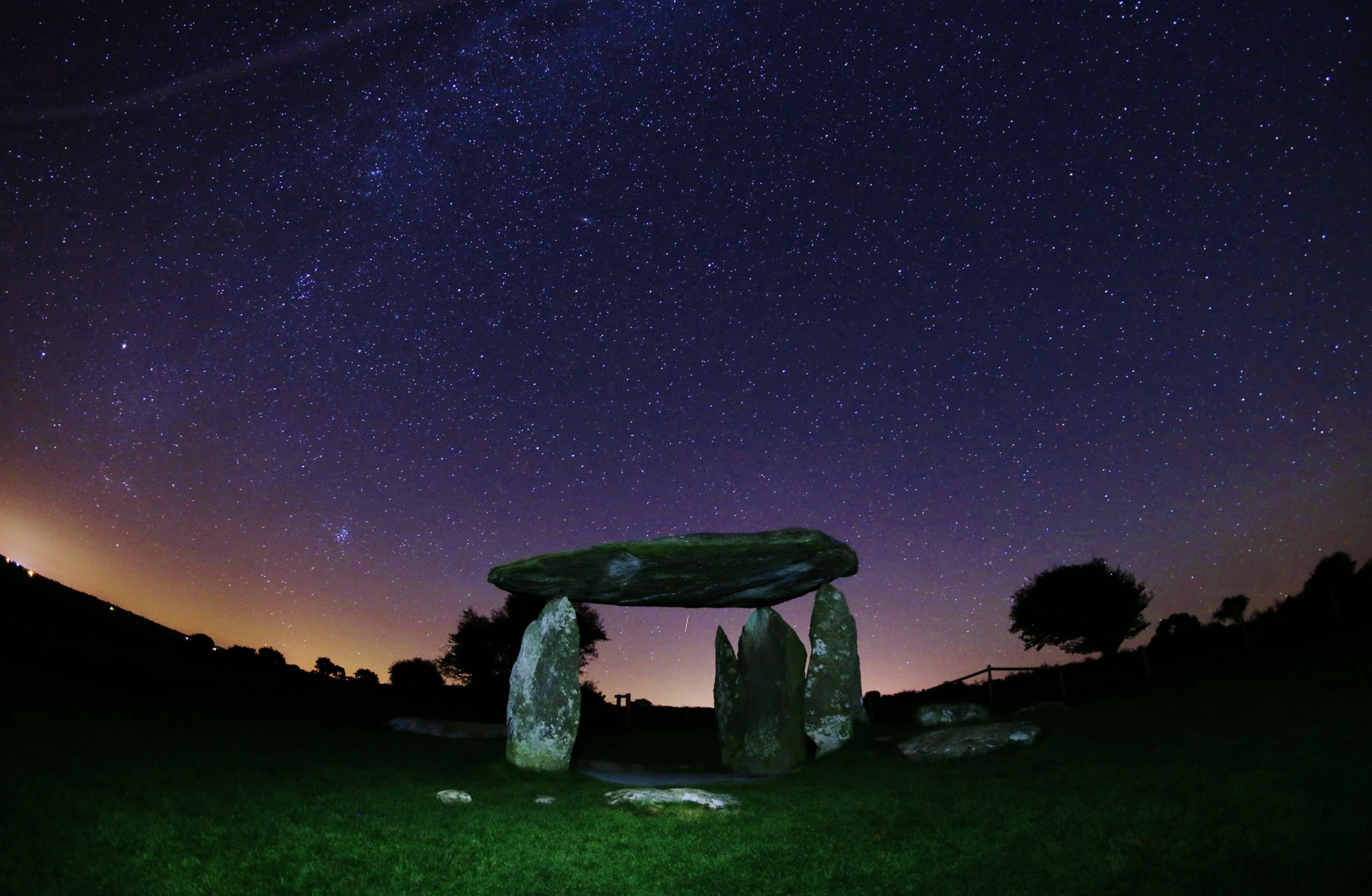
Samyang 8mm f/2.8 UMC Fisheye II lens, f/2.8, 30 secs, ISO 800, Canon EOS M3 camera
A whole invisible world can be discovered for those with a camera, a tripod, the right lens, and a little patience. Your camera can see what the naked eye sometimes cannot, and can capture a moment in time in a different light – a moment in time, frozen in history. In places where light is hidden and dissipated, a camera’s long exposure can reveal every detail that would otherwise remain concealed.
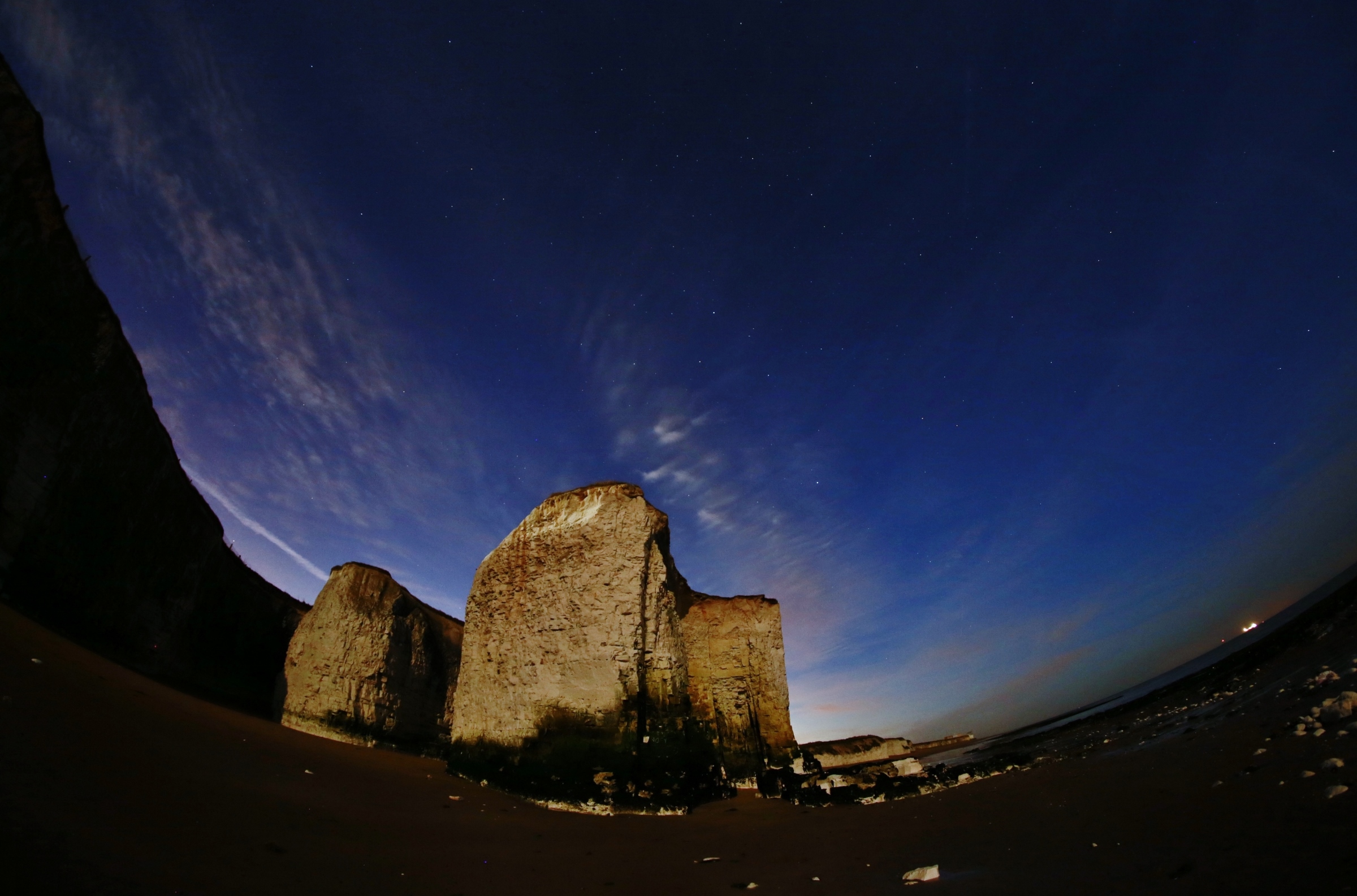
Samyang 12mm f/2.8 ED AS NCS Fisheye lens, f/2.8, 1.3 secs, IS 3200, Canon EOS 6D camera
Light pollution from the local seaside town downplays the effect of the stars in this picture, but the shape of the wisps of clouds, and the imposing cliffs, add to the picture
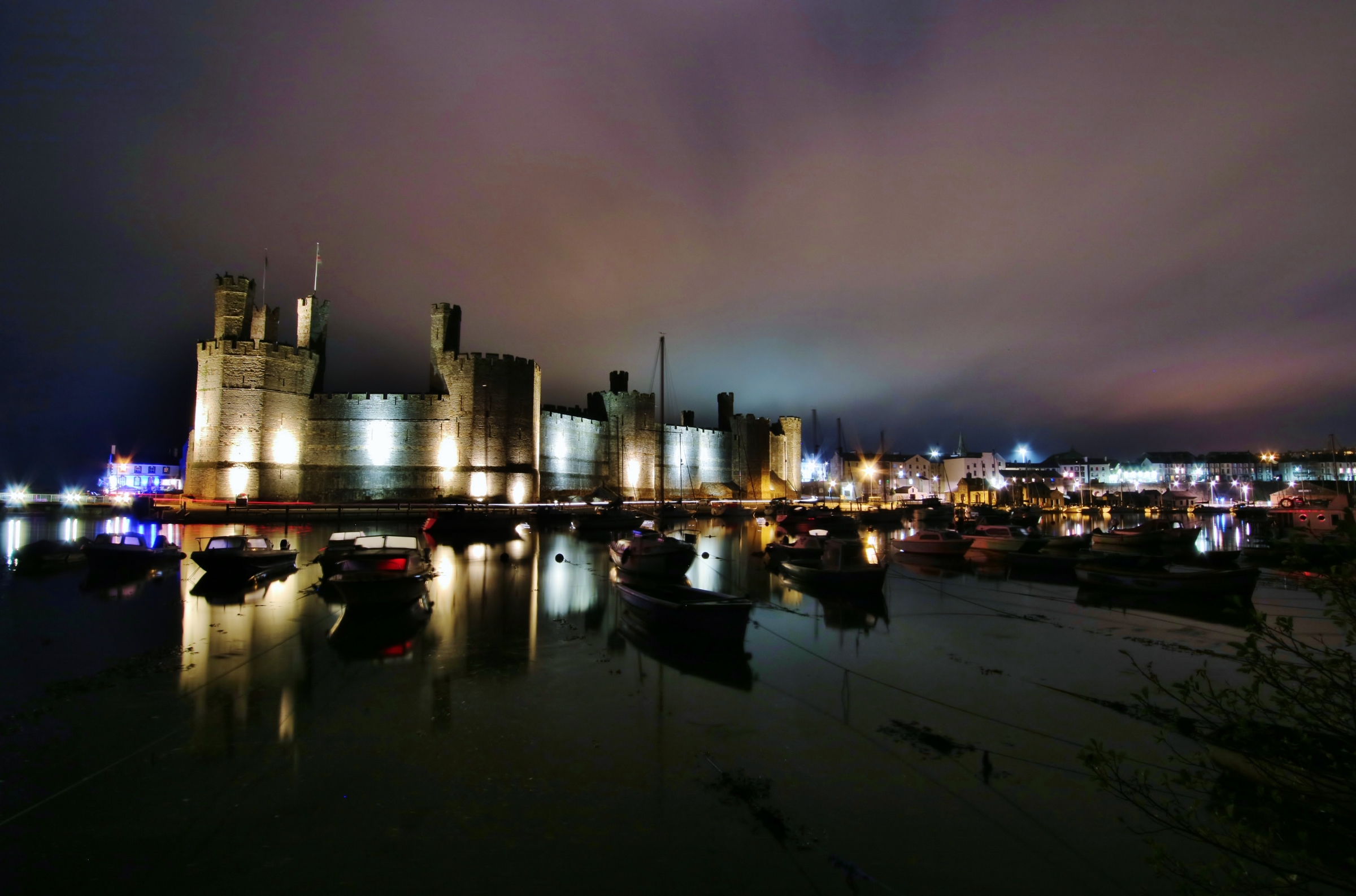
Samyang 10mm f/2.8 ED AS NCS CS lens, f/2.8, 30 secs, ISO 100, Canon EOS M3 camera
Caernarfon Castle, North Wales. Unfortunately it was a cloudy night, but the long exposure of 30 seconds give the clouds a smooth look of movement.
It’s not only the night sky that’s waiting to be captured. Cityscapes with impressive landmarks come to life in the night time, leaping out of the dark sky or the black sea to hit the viewer with bright colours, shapes, and lines, which blend in to the background in the daytime. Shooting from a high place of elevation downwards, or even from the ground upwards, can give your images the angle they need to draw the viewer in to the picture.
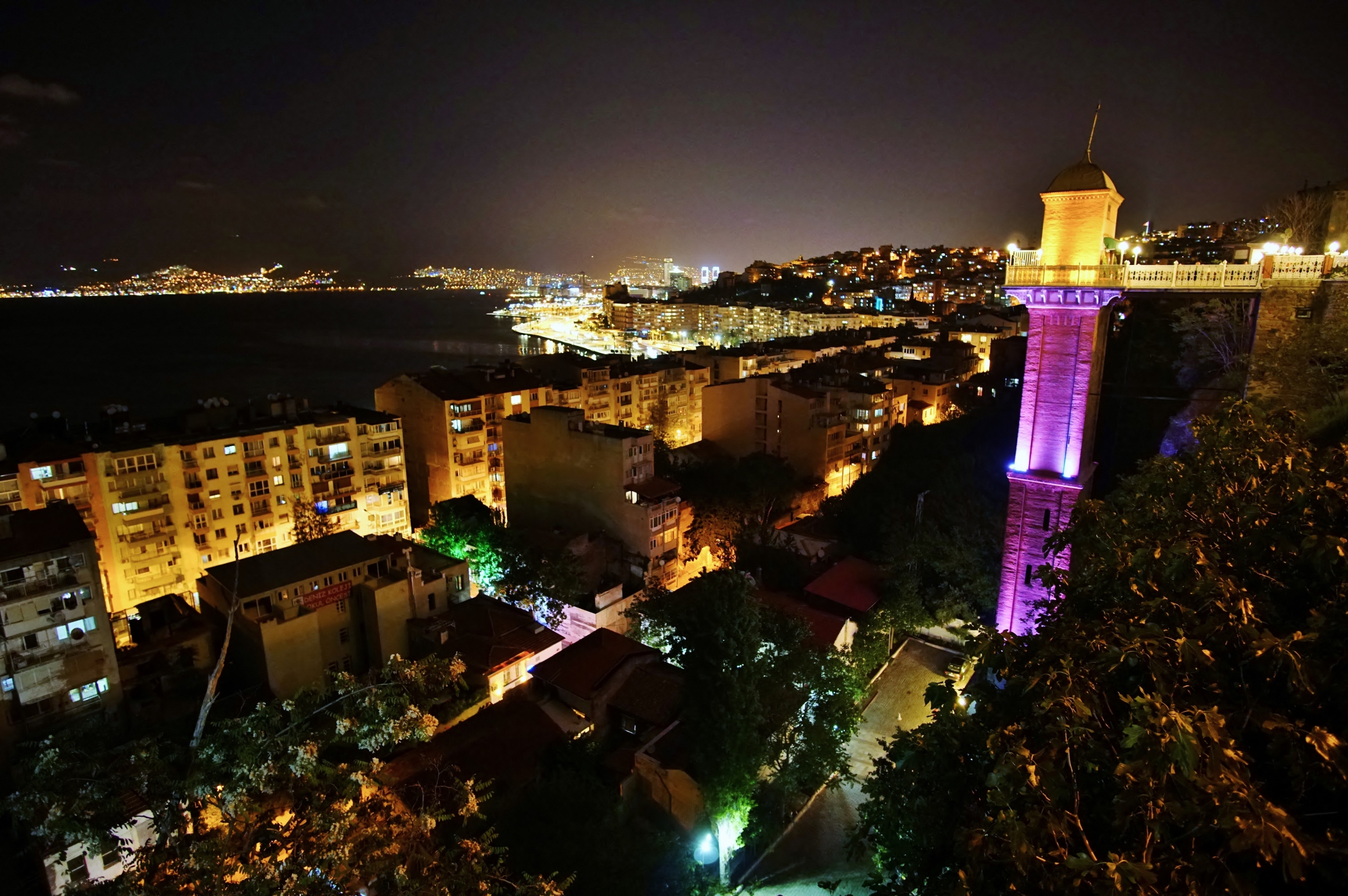
Samyang 12mm f/2 NCS CS lens, f/2, 1/10 sec, ISO 2000, Sony a6300 camera
The light and lively coastal town of Izmir, Turkey - shooting from an elevation with a very wide angle lens, for dramatic effect. I would have achieved sharper results with a lower ISO by using a tripod, which unfortunately I didn’t have to hand still, the bright f/2 aperture of this 12mm lens meant that I could shoot handheld, for decent results.
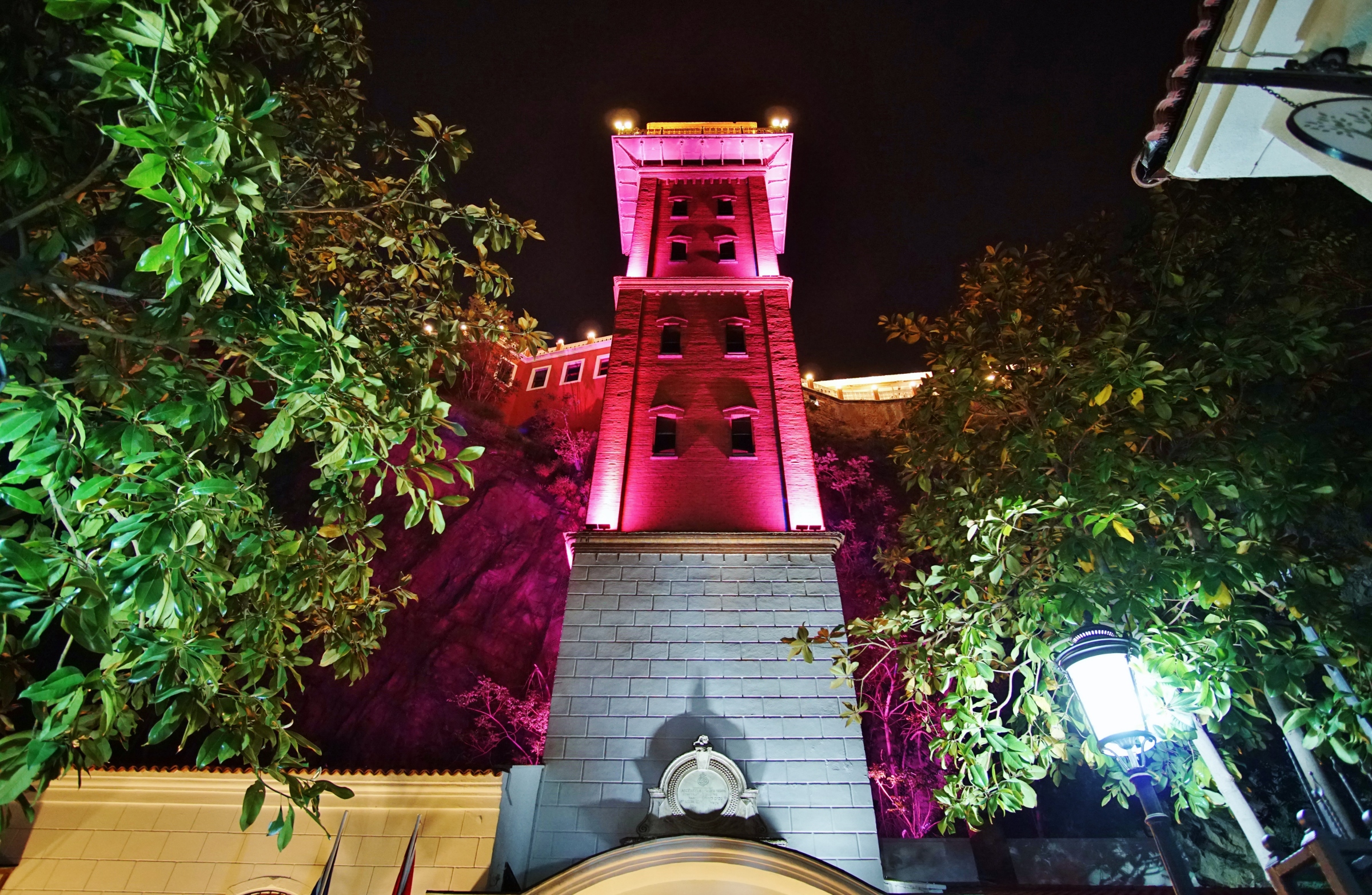
Samyang 12mm f/2 NCS CS lens, f/2, 1/13 sec, ISO 1600, Sony a6300 camera
Another dramatic angle of the same landmark in Izmir – another handheld picture taken at f/2.
If you’re using a lens with a longer focal length of 35mm or longer, and that lens has a bright maximum aperture (e.g. f/2 or brighter), then the city at night time is an ideal place to capture subjects against a beautifully out of focus background. Move your camera around, to ensure that the position of points of light in your backgrounds brings a balanced result to your final picture. Don’t be too consumed with your backgrounds though: make sure that your subject itself is lit the way you want it to be – don’t be afraid to use a soft flash, if you’re taking a picture of a human subject.
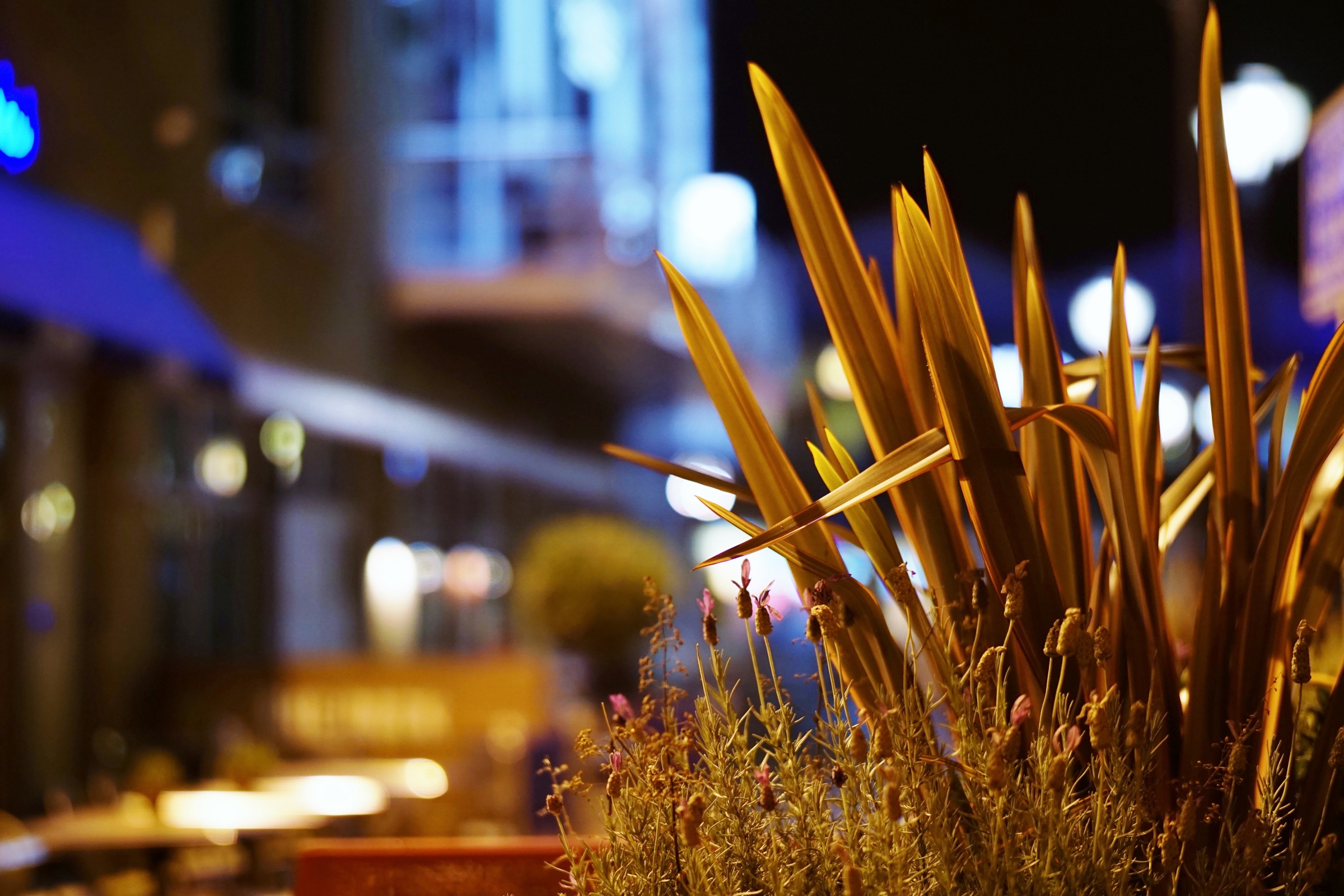
Samyang 50mm f/1.2 AS UMC CS lens, f/1.2, 1/125 sec, ISO 640, Sony a6000 camera.
The extremely bright aperture of this 50mm lens for mirrorless, APS-C cameras, means that a deeply out of focus background can be achieved, along with a fast enough shutter speed to get a sharp picture, even in the dark.
The city offers plenty of opportunity for bright and striking night time images – but astrophotographers are interested in capturing the majesty of the sky at night. For best results in this field of photography, most photographers choose wide-angle or ultra wide-angle lenses (20mm or wider on a full-frame camera, or 13mm or wider on an APS-C camera), which also have bright maximum apertures (f/2, or brighter). A wide angle of view and a bright aperture is a winning combination on a lens chosen for astrophotography – they will give you the field of view needed for a dramatic image, and the light needed to take it in the dark.
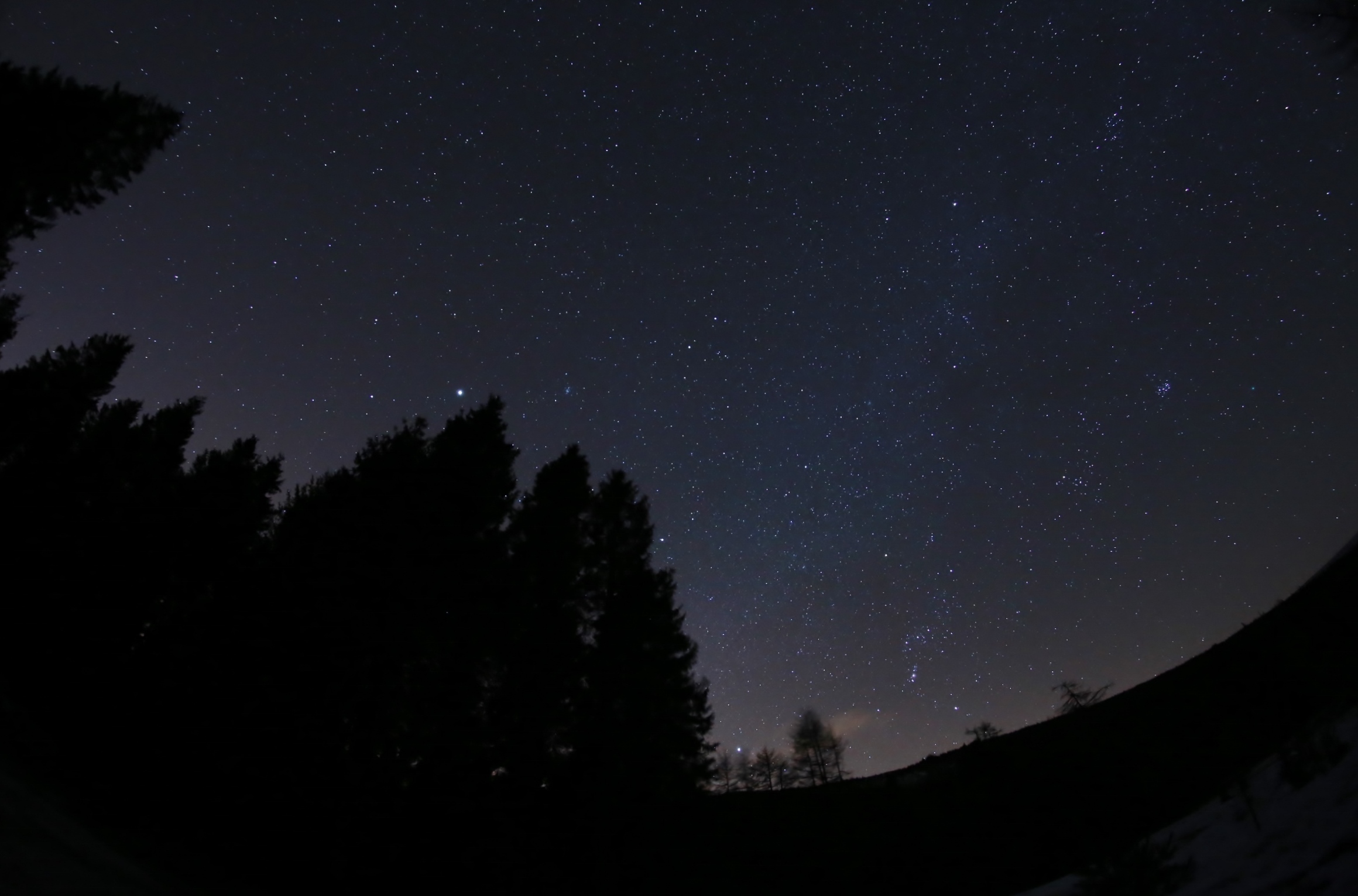
Samyang 12mm f/2.8 ED AS NCS Fisheye lens, f/2.8, 8 secs, ISO 5000, Canon EOS 6D camera
A picture taken in the middle of the Brecon Beacons, in Wales, UK, on a pitch-black, moonless night. This area of the UK is a special dark-sky designated area, away from civilization and light pollution from nearby towns. On the trees in the foreground, notice a slight blurriness, as they waved in the wind during the 8-second exposure.
A picture of only the stars in the night sky will not necessarily read well: it’s often necessary to have some object, shape or place in the foreground to give the viewer a sense of scale to help them appreciate the view they’re receiving. Sometimes the foreground can simply be the outline of a dramatic structure or landscape, or even a person.
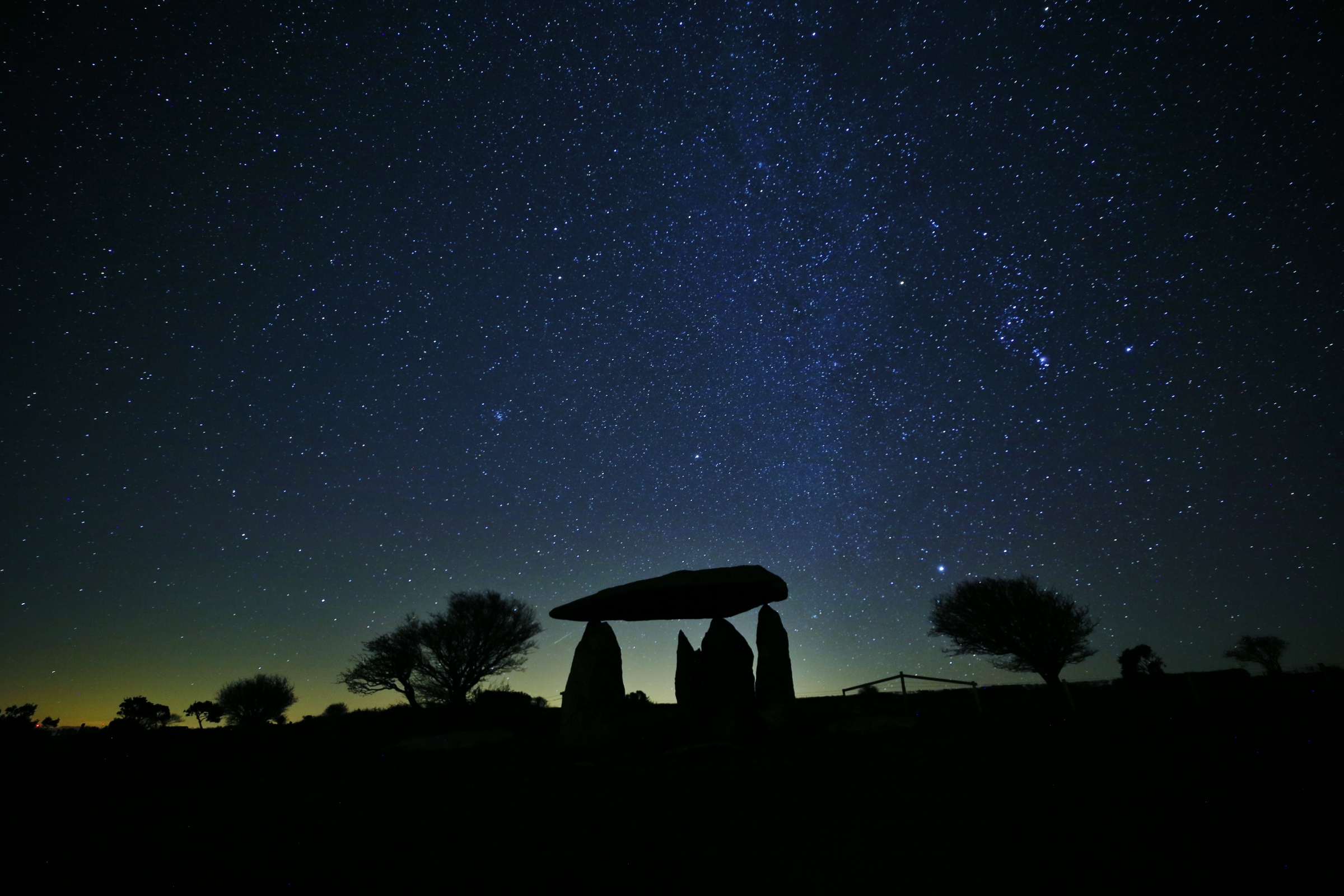
Samyang XP 14mm f/2.4 lens, f/2.4, 25 secs, ISO 1600, Canon EOS 6D camera
One of the best lenses I’ve tested for shooting the night sky is the Samyang XP 14mm f/2.4. This is because of its astonishing sharpness in the image corners, combined with relatively low coma levels, which can smear bright points of light in the corners of your image. This is a picture of the ancient Pentre Ifan burial chamber, deep in the Welsh countryside, in the UK.
But if you want more than just a silhouette, then bring a small torch with you, with some coloured filters to hold in front of it: briefly ‘brush’ your scene with the light from your torch during your exposure to bring your foreground to life. Experiment for best results – and use your imagination!
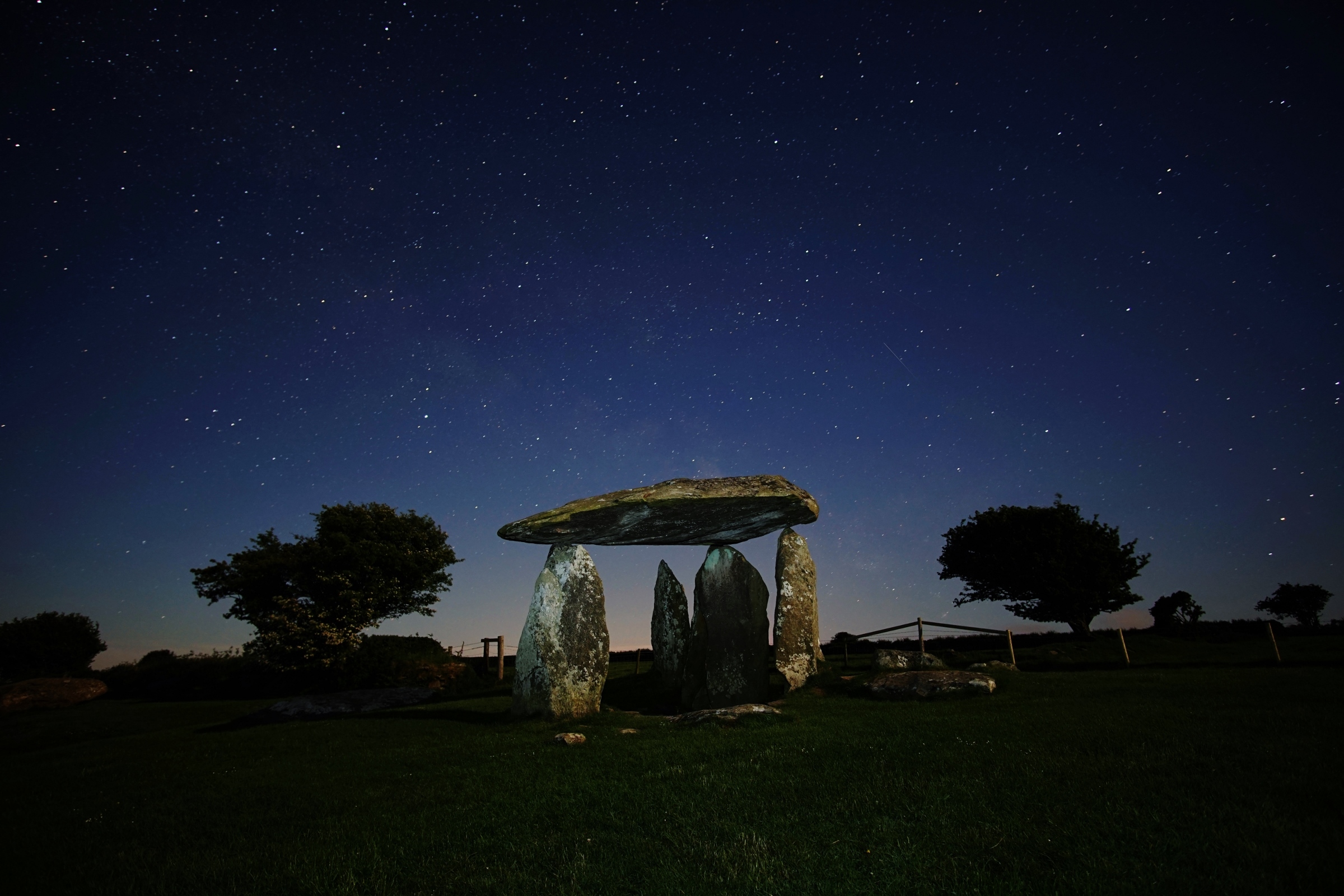
Samyang 12mm f/2 NCS CS lens, f/2, 30 secs, ISO 500, Sony a6300 camera
The same burial chamber, ‘painted’ with a little light from a torch from behind the camera during the exposure. It was an LED torch with a slightly blue tint to it, so, to balance the colour, I placed a warm yellow filter in front of it, as I flashed it towards the burial chamber for approx. 1 second during the 30 second exposure.
Be careful when shooting – remember, in the middle of the darkness your image will look almost too bright on your screen, and you can be tricked into taking a picture that turns out to be too dark when you get home and check it. Use you camera’s viewfinder if it has one, or take the picture brighter than you think it needs to be. Also, check the weather forecast in your area: go out on a night with good visibility and, of course, no clouds, and try to go out on a night with a new moon: light from the moon will ruin the contrast of your images of the stars.
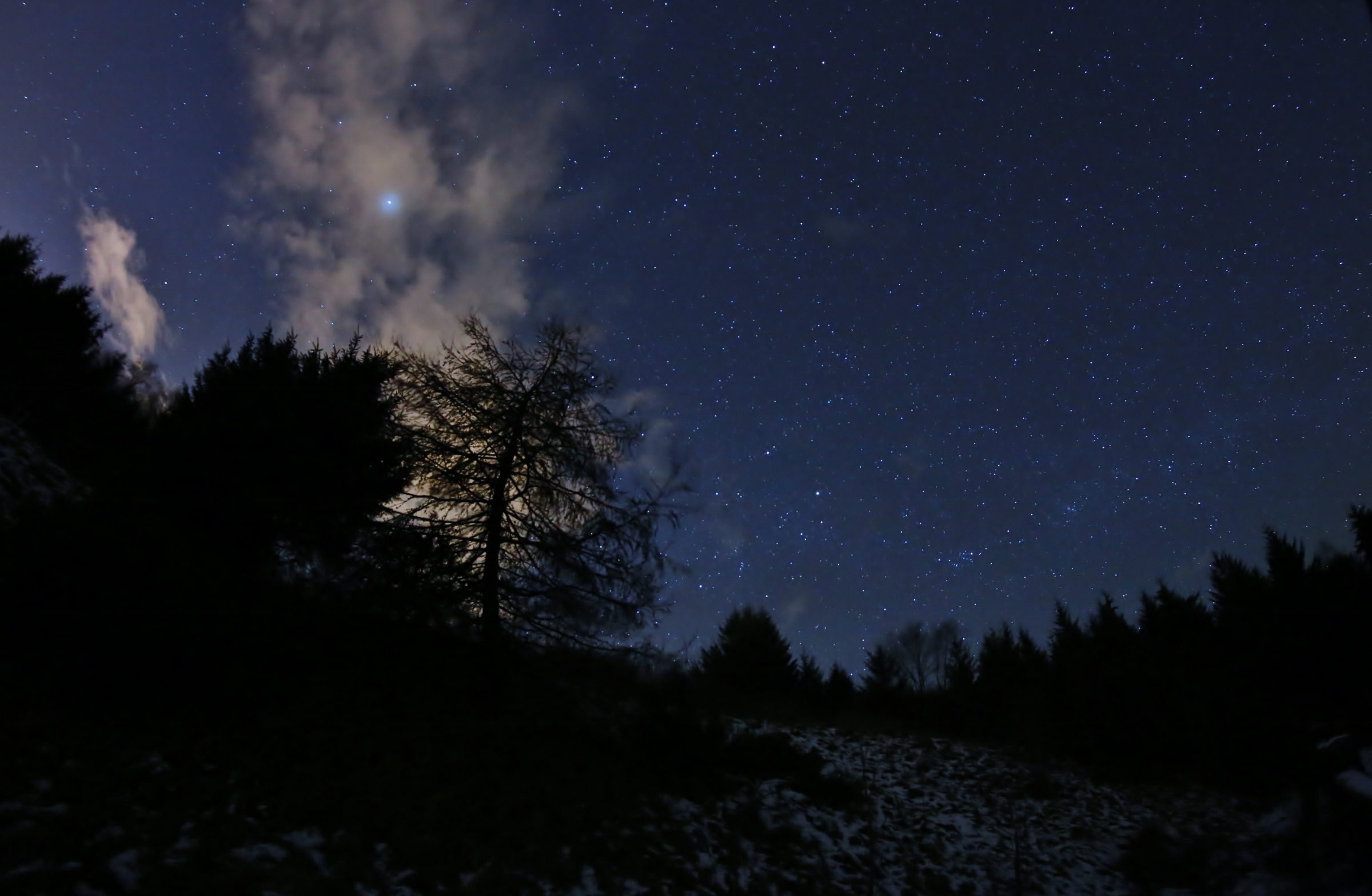
Samyang 12mm f/2.8 ED AS NCS Fisheye lens, f/2.8, 6 secs, ISO 5000, Canon EOS 6D camera
It’s best to shoot on a cloudless night, but don’t panic if a few wisps make their way into your picture – they can add character and bring out your foreground. Have patience, and wait for the right moment.
関連レンズ
- 前の記事前の記事はありません。
- 次の記事Capturing Cathedrals